The Laughter of War
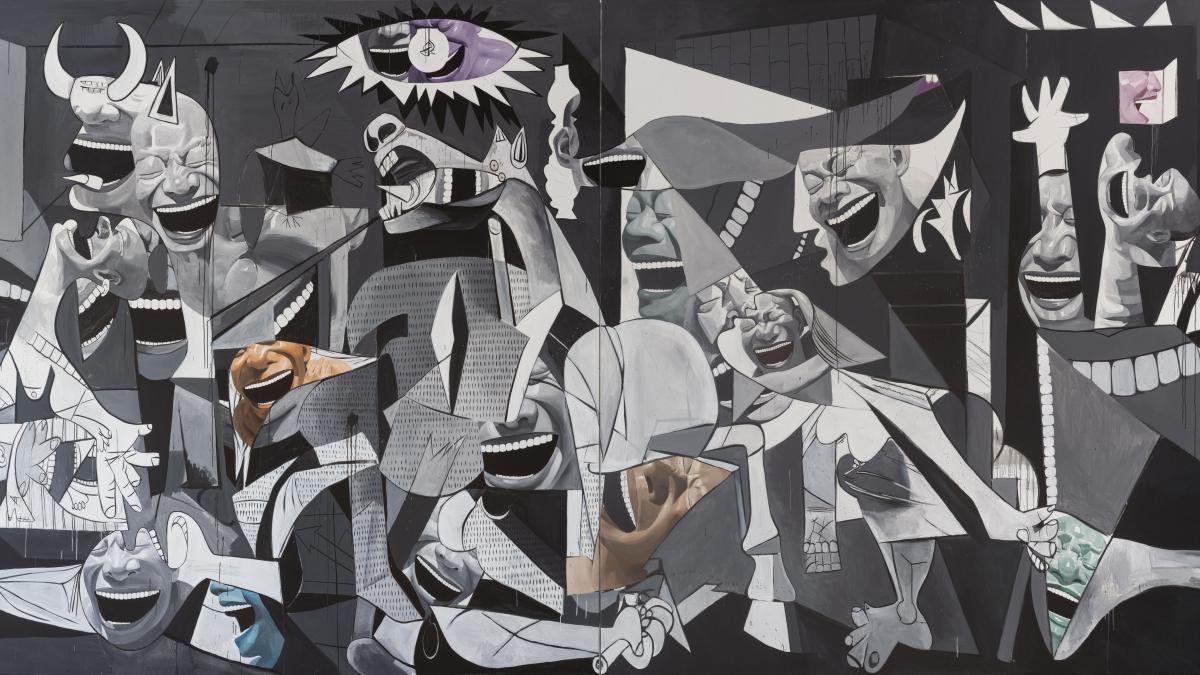
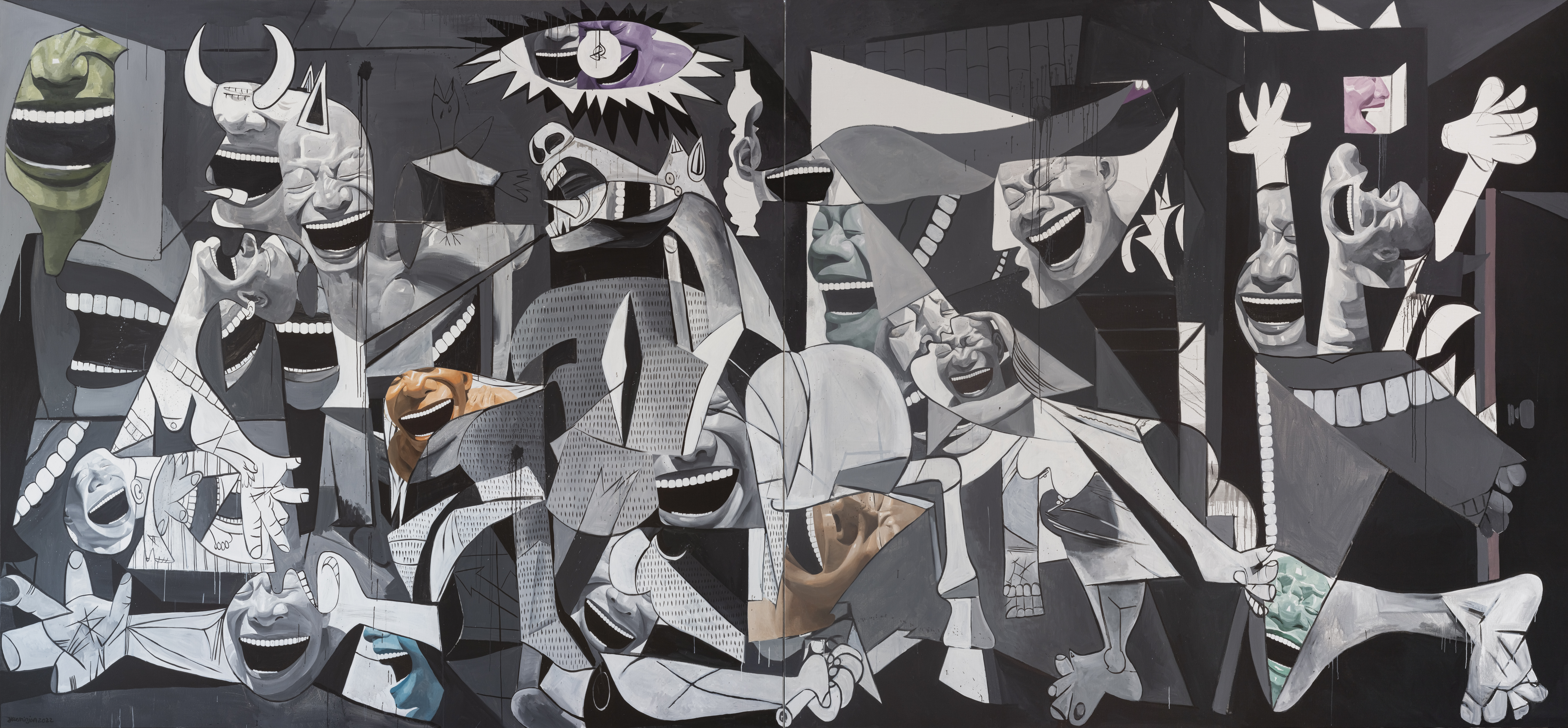
In The Laughter of War, Yue Minjun (Daqing, China, 1962) proposes a critical and contemporary reinterpretation of Guernica, in which the memory of war and violence is reactivated through the repeated motif of laughter. Far from being a tribute, the work establishes a direct confrontation with the paradigm of modern political art, appropriating its visual language in order to dismantle and reconfigure it from a present-day perspective. Drawing on a study of the formal logic of Cubism and Picasso’s methodology, Yue Minjun transforms the multiplicity of viewpoints and formal fragmentation into a new pictorial space of powerful sensory impact.
In this reinterpretation, the cubist figures of the original are replaced by the artist’s recurring characters, rendered in a realistic style that deliberately flattens the structural complexity of the original. The smiling faces — devoid of humor — along with the introduction of color intensify the tragic dimension of the work, creating a narrative space in which the aesthetics of both artists collide and intersect.